Roof ventilation is important because it can help your roof last longer, reduce energy costs, and prevent damage to your shingles. Roof vents also remove musty air and moisture from your attic, which can prevent problems like mold, mildew, ice, rot, and poor air quality.
Roof ventilation is based on the fact that warm air rises. Good venting occurs when cool air can enter the attic near the eaves and exit near the peak.
To determine if your attic has sufficient ventilation, you can install a thermostat and monitor the temperature. You can also check the 1/300 rule, which recommends 1 square foot of ventilation for every 300 square feet of enclosed attic space. Half of the ventilation should be at the upper portion (exhaust vents) and half in the lower portion (intake vents).
Attics require a minimum of 1/150 of net free area for proper roof ventilation. This means that for each 150 square feet section in your attic, 1 square foot of net-free area is required.

The importance of ventilated soffit panels
The primary reason for installing vented soffit is to ensure that your home has proper air circulation through your attic. While it may seem contrary, having proper ventilation actually prevents issues related to moisture build-up and increased energy costs. Some issues from not having proper airflow are moisture build-ups and ice dams. Moisture enters the attic space form both outside the house and inside the house as a result of showering, cleaning and doing laundry. Without proper airflow the moisture is unable to escape and can lead to mildew and mold, and can shorten the life of your shingles.

Low Profile Ridge Vent

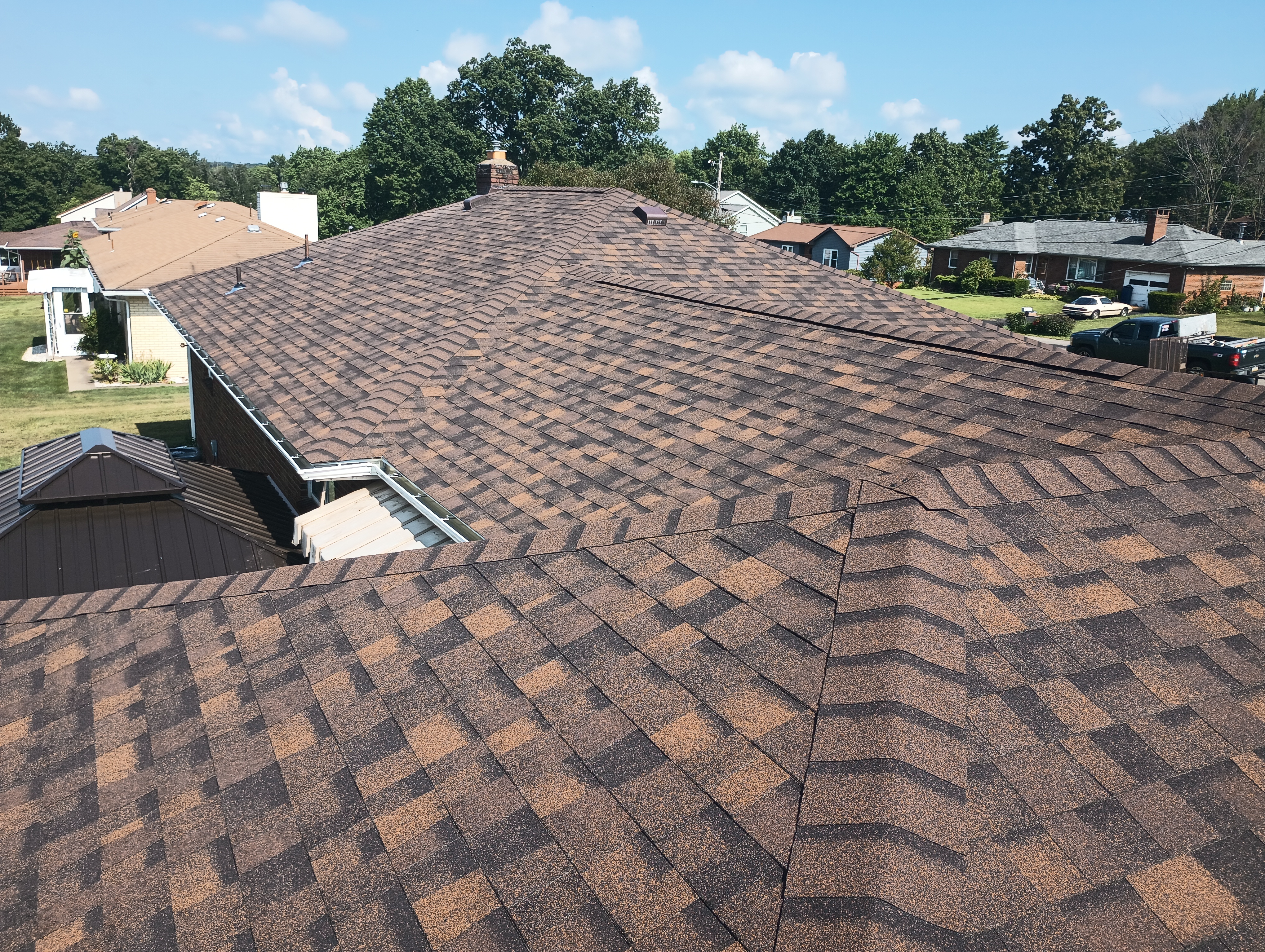
A roof ridge vent is a static vent specifically designed to fit along the ridge (the highest point) of the roof. They usually are the whole length of the roof and can be made to blend into the roofline so they are barely noticeable. Ridge vents must always be paired with another type of vent to ensure good airflow throughout the attic.
Power Fans
Power fans are also a great option to keep the air moving in your attic space. They come in handy when your roof doesn’t have enough ridge line to vent appropriately.